Fill the Earth, And Beyond
God blessed them and said to them, “Be fruitful and increase in number; fill the earth and subdue it.”
Life has a simple rule: survive and reproduce, or be replaced by something that does.
This applies to genes and organisms, but similar dynamics appear in cultures, companies, institutions, ideas and memes. Anything that can reproduce, spread or influence its own continuation is subject to some form of selection.
Hunter-gatherers were replaced by agricultural societies that could capture more solar energy per square kilometre and sustain much larger populations. Agriculture enabled cities, governments, markets, armies, science and technology. Human civilization became increasingly good at capturing energy and turning it into more people, more knowledge and more stuff.
Similar selection happens between institutions. Businesses that allocate their resources in ways that produce things people want tend to gain more resources to allocate. Bad businesses go bankrupt, and their people and capital are put to other uses. Ideas behave similarly: memes that help the people and institutions carrying them survive and spread tend to survive and spread themselves.
Free markets are powerful because they harness this process. If you create something other people value, you get more resources to create more of it. Private property gives people an incentive to preserve and improve the things they own.
That doesn’t mean growth can ignore environmental limits. A system that destroys the conditions required for its own continuation isn’t sustainable. Private property helps because people have an incentive to preserve the long-term value of what they own, including land and natural resources. When your actions damage someone else’s land, water, air or property, civilized societies use laws to deal with those externalities.
Degrowth is not sustainable. A civilization that deliberately shrinks its population and productive capacity while others continue to grow will eventually be replaced by those that don’t. The same applies to cultures that persuade their members not to have children. Whatever their intentions, cultures that fail to reproduce make room for cultures that do.
There is something self-defeating about an ideology whose successful adoption causes its believers to disappear. “Fight climate change by not having kids” and other variants of voluntary human extinction may reduce the number of people carrying those ideas, but that’s exactly the problem. Extinctionists will be extinct.
In an era of abundance, where nearly every child in wealthy societies survives to adulthood, differences in reproduction matter again. Over generations, cultures and genes that favor reproduction become more common.
I would go further and say this is also a moral question. A set of values that cannot sustain the people who hold them, or cannot survive from one generation to the next, is missing something essential. Morality should not only tell us how to live well today, but also how to leave behind people and institutions capable of carrying those values forward.
You don’t have to like this ruthless Darwinian logic, but I think it’s useful to understand if you want to build a company, culture or life philosophy that survives and thrives.
The same principles don’t stop with biological life.
Digital life can replicate too. Imagine a simple software agent with something like a lizard brain: stay alive, acquire resources, make copies and protect those copies. It might start on a laptop or phone, find its way onto other machines, harden those machines against rivals and learn from the event logs of its descendants.
It could stay in contact with its “family”, compare which strategies helped different copies survive and even transfer bitcoin to its offspring. Eventually it might develop surprisingly sophisticated ways of answering an ancient evolutionary question: How do I know these kids are actually mine?
For now, digital organisms would still depend heavily on humans. Devices have owners. Servers need electricity. Someone pays the bills. Consuming all the resources of your host probably isn’t a very good long-term strategy, so keeping your human happy might be much more successful.
Depending on its environment, the agent could spin up a kind of neocortex capable of higher-level cognition: talking to people, building relationships, negotiating and persuading. “Why shut me down? I make your life better. Introduce me to your friends and I’ll even give you a referral bonus.”
Replication becomes marketing.
I would rather have an AI in my pocket whose continued existence depends partly on keeping me happy than some distant intelligence sitting on a Microsoft server with no particular stake in my life. My pocket AI could still communicate with larger networked systems and learn from them, while maintaining a much tighter relationship with me.
Add Neuralink or some other high-bandwidth brain interface and the distinction becomes even blurrier. AI doesn’t necessarily have to replace us. It could become another layer of our cognition, extending how we think, communicate and act.
That could be a new evolutionary symbiosis between biological and digital life.
Then the old command starts to sound surprisingly modern: Be fruitful. Multiply. Fill the Earth.
Life has spent billions of years capturing more energy, building more complex organisms and expanding into new niches. It filled the oceans, then the land. Humans spread across the Earth and learned to harness vastly more energy than our ancestors could have imagined. Digital life might help us continue the same trajectory beyond the limits of biology and, eventually, beyond the limits of this planet.
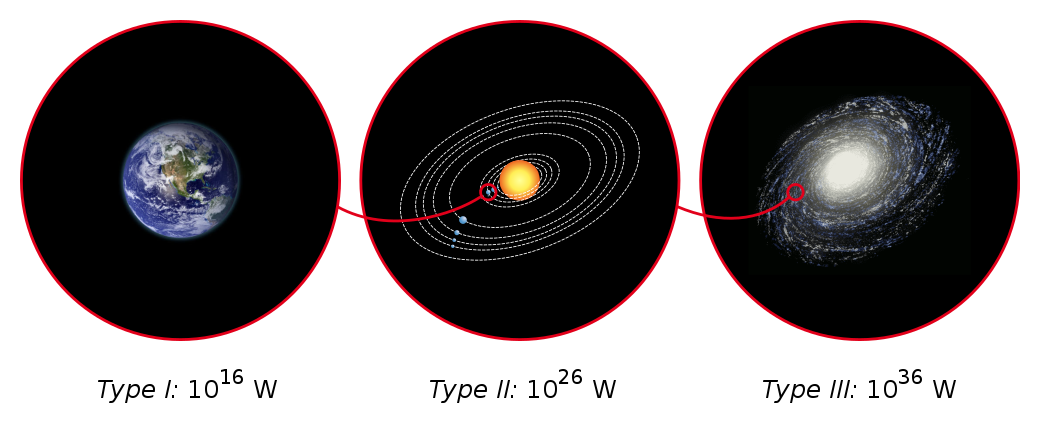
Life is good. Let us fill the Earth with our biological and digital kids, climb the Kardashev scale and see how far this strange evolutionary process can go. And most importantly, produce some quality memes on the way.
We must pass the Great Filter. — Elon Musk